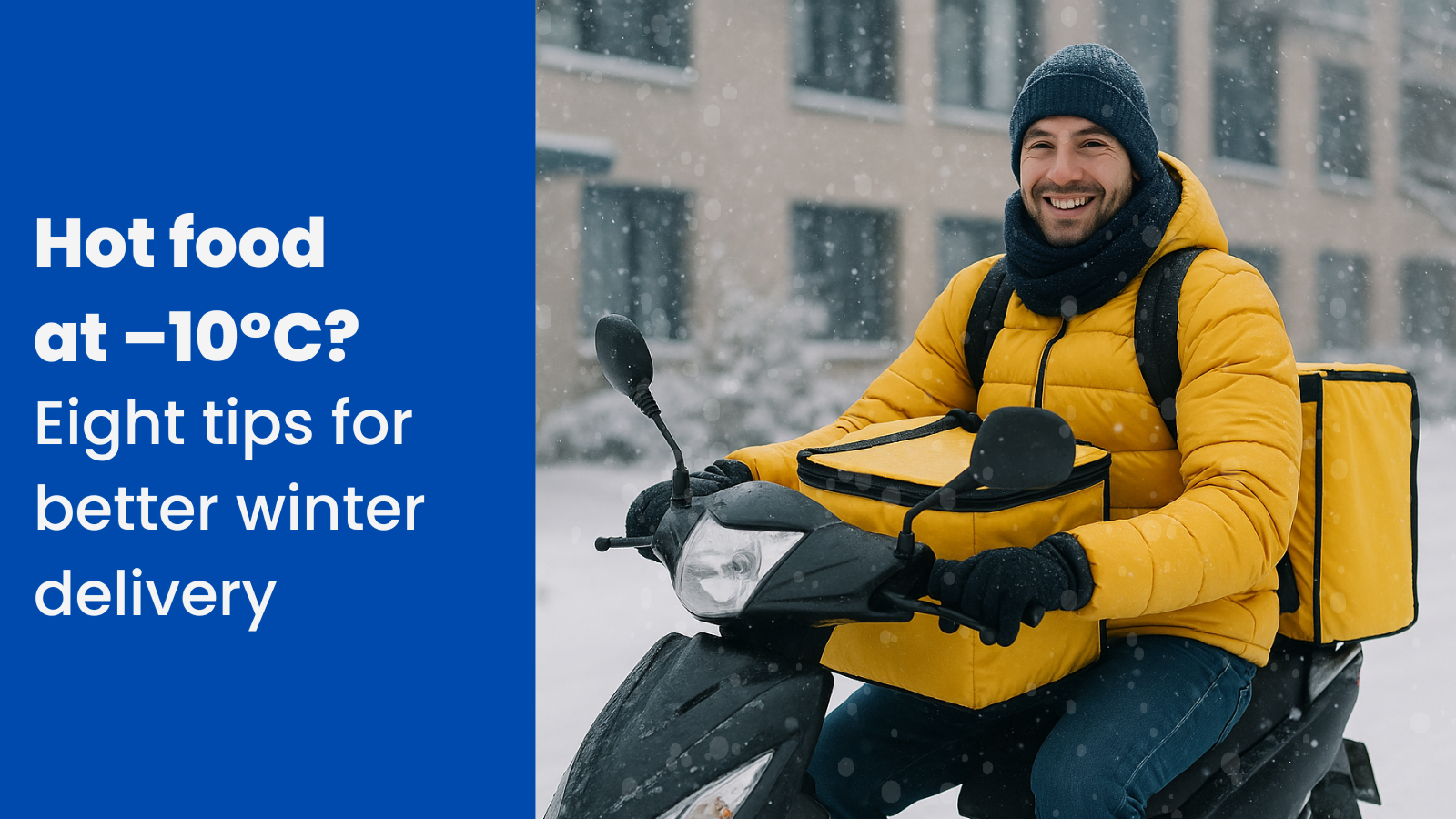
Hot meal despite -10°C? Eight tricks for winter delivery.
Autumn and winter are seasons measured in degrees Celsius and human laziness. Often, looking out the window at a dark night at 5 PM, wind or rain, people simply don’t feel like going to your restaurant. They prefer to order and eat, snugly wrapped in a blanket, lying on the couch. The weather during this period is a big test for your restaurant’s packaging and logistics.
In this blog, we will therefore focus on what happens between your kitchen and the customer’s door. I will present a few practical tricks confirmed by research and testing that will help you deliver food in the form your customer expects.
1. Match the container to the volume of the dish.
Incorrectly sized packaging makes a huge difference. The rule is simple: the less empty space, the slower the dish loses heat. It’s not rocket science, just a basic physical effect.
2. Preheat the container before placing the dish inside.
It sounds improbable, but studies on catering packaging materials (ReliancePak, 2023) have shown that “pre-heating the container” significantly improves temperature retention. Cold container walls can take away several degrees of heat.
3. Let the steam escape.
Condensation is one of the biggest enemies of food quality in autumn-winter deliveries. According to a study (MDPI Energies, 2022), “the number and position of ventilation holes directly affect the cooling rate and the formation of condensate.” In practice, your dish should go into packaging with micro-holes that allow steam to escape instead of turning into condensation.

4. Air is a reliable insulator.
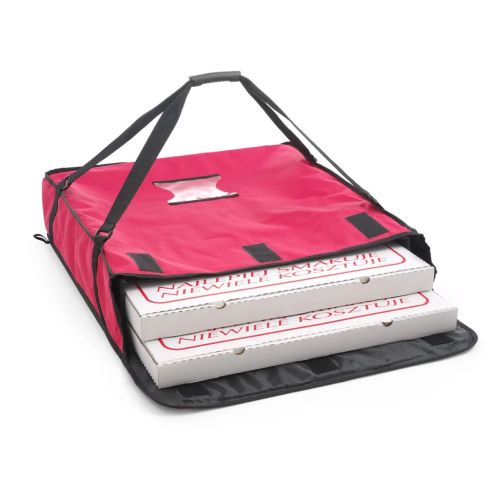
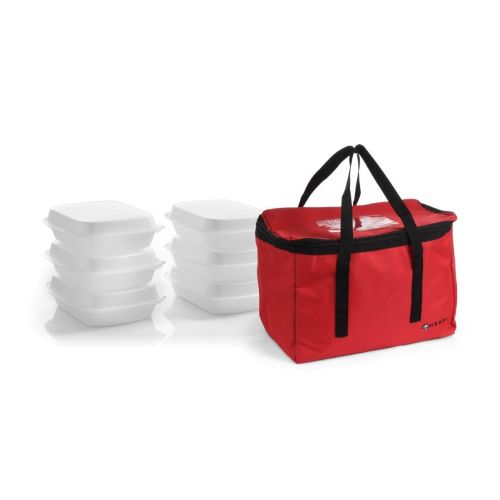
Studies from ScienceDirect show that even a thin layer of air between the container and the outer bag significantly improves thermal insulation. It is therefore worth considering the “container + thermal/paper bag” principle.

5. Cold with cold, hot with hot.
6. Logistics and communication.
There is no packaging that can save a one-hour delivery in a snowstorm. Here, logistics and communication are key. The dish should be placed in the courier’s bag within 30 seconds of preparation (InnaturePack, 2024). Do not let dishes cool “on the counter” while waiting for couriers. Set a fixed route with them.
7. Heating element in transport.
GN 1/1 Heating Element | BAGSTAR Store
8. Selection of the material used for packaging.
XPS (extruded polystyrene) - A very popular material used for transporting hot dishes, especially soups and main courses. XPS has a dense structure and low absorbency. which allows it to withstand moisture and pressure better. It also has a very low thermal conductivity (λ ≈ 0.030 W/m·K) which means it has a high ability to retain temperature for a longer time.
Packaging made from XPS performs well on short and medium routes, especially when the food is placed immediately into a thermal-insulated bag.
Example: XPS lunch containers – styrofoam take-away – ideal for soups, stews, or classic take-away meals
EPP (expanded polypropylene) - A material that is more flexible and mechanically resistant than XPS, while also being lightweight and thermally insulating. Most commonly used in reusable containers and menu boxes. It handles fat and moisture well, making it ideal for burgers and kebabs.
Example: menuboxy EPP Infinity – For street food and premium dishes.
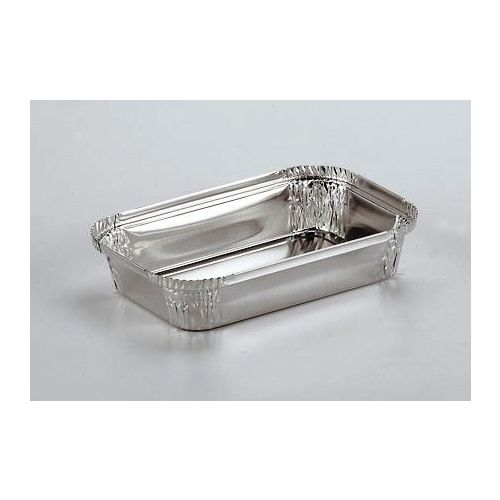
Aluminium - (a heat reflector on one side conducts temperature, while on the other, when closed with a lid), it reflects thermal radiation back inside, This way, our dish loses heat more slowly. It is resistant to fat, sauces, and moisture, and does not allow odors to escape. It is not suitable for crispy dishes (high condensation due to lack of ventilation), but it is reliable for soups, casseroles, meat dishes, and pasta.
Example: aluminum containers – used in fast food and catering.
Microflute cardboard - acts as a natural thermal barrier because it is made of several layers of paper with numerous air channels between them. The cardboard “breathes,” so it allows most of the moisture to escape, which reduces the effect of steam condensation.
Example: XXL burger box 15×15×10 cm lub Divided takeout box 900/450 ml
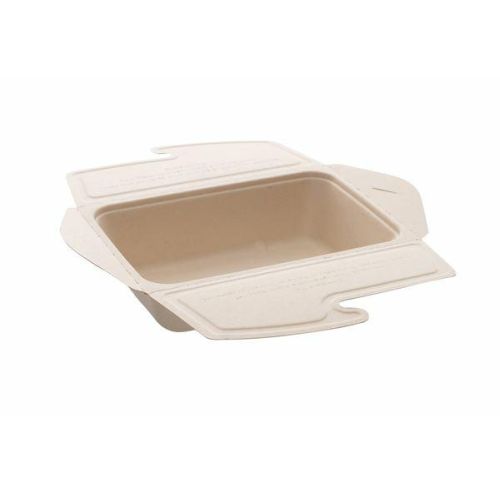
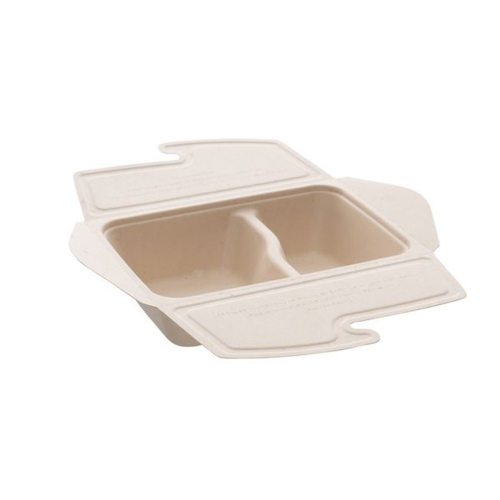
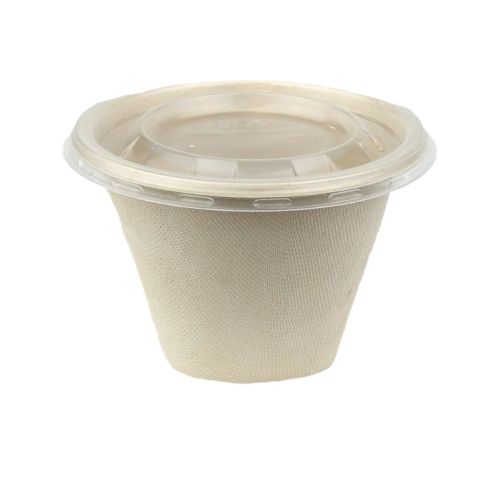
Sugarcane (bagasse) -is made from the fibers left after pressing sugarcane juice. A container made from it is lightweight, rigid, and resistant to fat and temperatures up to approx. 100 °C. In terms of thermal properties, sugarcane can be placed between microflute cardboard and EPP. It may not insulate as well as foamed plastics, but it vents moisture better and allows the dish to “breathe”
In practice, it works well for:
-
fried and breaded dishes, where overly tight packaging (e.g., XPS, aluminum) causes a loss of crispiness due to steam condensation,
-
burgers, wraps, fries, and fast-food dishes that are delivered to the customer within 20–30 minutes.
The drawback is that over longer delivery distances, sugarcane loses its insulating properties. The dish cools faster than in XPS or EPP containers. Additionally, if the container has no barrier coating, it may soften slightly when holding very hot, fatty sauces.
Example: menubox trzcina GIGA BEPulp 3-dzielny 380×240×60 mm - A good solution for burger shops and food trucks, where maintaining a balance between heat retention and condensation control is important.
PP (polypropylene) - Probably the most popular plastic with an extremely wide range of applications in the food industry, especially in catering containers and hot food deliveries. Thermal resistance from –18 °C to +120 °C, It allows for both refrigerated storage and contact with hot food.
As a material used to make containers for hot food delivery, PP works well for dishes with sauce, pasta, curry, or Asian cuisine – it is resistant to fat, does not react with acidic foods, and is characterized by thermal stability.
The drawback is poor insulation. PP does not retain heat as well as XPS or EPP, so a delivery without using a thermal-insulated bag may result in a cold dish. at the customer’s doorstep.
Example: FastPac RC28 container (PP material, usable up to +120°C, three-compartment 975 ml) – suitable for hot lunch sets.
PP meets the requirements Regulation (EC) 1935/2004, Commission Regulation (EU) 10/2011 (with later amendments) as well as 2023/2006/EC in the field of materials intended for food contact. In migration tests, it is considered a safe material for contact with fatty, acidic, and watery foods, provided it is used under the conditions specified by the manufacturer (be sure to check the declarations).
Every restaurant has its own rhythm and menu, but physics is unforgiving. If you want your food to arrive hot even at –10°C, start with the packaging. Choose a material that works with your dish, not against it. Find out what best suits your menu. Also, remember that we are very happy to help you choose the optimal solutions. In addition to professional advice, you can also count on free packaging samples.
Winter delivery checklist:
-
Match the container to the volume of the dish (no empty space).
-
Preheat the container or bag..
-
-
Separate cold ingredients from hot ones.
-
For longer routes — use thermal-insulated bags or containers with a heating element.
-
Choose the material according to the type of dish, not the price.
-
Sources:
ReliancePak (2023)
https://reliancepak.com/blog/which-catering-packaging-materials-offer-the-best-temperature-retention-for-hot-food-delivery-services
MDPI Energies (2022)
https://www.mdpi.com/1996-1073/15/22/8659
ScienceDirect (2018)
https://www.sciencedirect.com/science/article/abs/pii/S096030851730072X
InnaturePack (2024)
https://www.innaturepack.com/how-to-ensure-safe-delivery-packaging-from-kitchen-to-customer/
Regulation (EC) No 1935/2004
https://eur-lex.europa.eu/legal-content/PL/TXT/?uri=celex%3A32004R1935
Regulation (EU) No 10/2011
https://eur-lex.europa.eu/legal-content/PL/TXT/?uri=celex%3A32011R0010
https://eur-lex.europa.eu/legal-content/PL/ALL/?uri=CELEX%3A32006R2023